
One of the most frequent questions homeowners ask before switching to renewable energy is: do solar panels work in the rain? Along with rain concerns, many wonder if solar panels work in cloudy weather when dark storm clouds roll across the sky. For residents in high-rainfall regions like Karnataka, asking does solar panel work in rainy season months is a vital question when planning annual energy budgets.
The short answer is a reassuring yes. Solar PV systems do not shut down when the weather turns wet. While power output drops during overcast periods, photovoltaic panels continue converting diffuse daylight into usable electricity. Understanding solar panel efficiency in rain, conducting essential monsoon maintenance, and choosing the right backup storage ensure your home stays powered year-round.
TABLE OF CONTENT
Do Solar Panels Actually Work in Rain?
To understand why solar panels work in the rain, it helps to realize that solar photovoltaic (PV) cells rely on daylight particles (photons) not ambient heat or direct thermal sunlight to generate electricity. Sunlight consists of both direct rays and diffuse light. Even during heavy downpours, diffuse light passes through storm clouds and triggers the photovoltaic effect in your solar cells.
When evaluating how solar panels work in cloudy weather, field studies show that modern solar arrays produce between 10% and 25% of their rated peak capacity on overcast days. So, if you are asking if solar panels work in the rain during monsoon storms, rest assured that your system will continue producing power as long as daylight is present.
How Do Solar Panels Work in Cloudy Weather?
Thick cloud cover acts as a natural filter, scattering sunlight rather than blocking it entirely. But how exactly do solar panels work in cloudy weather when the sky is dark gray?
Photons Still Reach the Cells:
Diffuse light passes through cloud vapor, allowing solar panels to maintain voltage output.
Cooler Operating Temperatures:
Extreme summer heat actually decreases solar panel efficiency (panels lose efficiency above 25°C to 30°C). Overcast, rainy weather cools the panels down, helping them operate at optimal electrical voltage.
Monsoon Energy Balancing:
While individual rainy days produce less energy, seasonal generation balances out over the year.
Does Solar Panel Work in Rainy Season Conditions?
For homeowners across South India, a primary concern is: does solar panel work in rainy season months without causing power shortfalls? During the peak monsoon season (June through September), solar generation experiences a noticeable dip, but systems remain fully functional.
When assessing whether solar panels work in rainy season stretches, on-grid solar systems automatically draw supplemental power from the main electrical grid whenever solar output drops. If you have a battery backup system, stored solar energy from sunnier mornings seamlessly carries your household through evening downpours.
Understanding Solar Panel Efficiency in Rain
Evaluating solar panel efficiency in rain reveals an unexpected benefit: rainwater acts as a free, natural cleaning mechanism. Over dry summer months, dust, dirt, pollen, and bird droppings accumulate on solar glass, creating a barrier that reduces output by up to 15%.
Heavy rain washes away this surface grime. Consequently, solar panel efficiency in rain leads to a noticeable performance surge once storm clouds clear and direct sunlight returns.
Weather Condition | Sunlight Intensity | System Output Efficiency | 5 kW System Daily Output |
Clear Sunny Day | 100% Direct Light | 100% (Peak Capacity) | ~20 to 22 Units |
Light Cloud Cover | 50%–70% Diffuse Light | 50%–70% Efficiency | ~10 to 14 Units |
Heavy Rain & Clouds | 10%–30% Diffuse Light | 10%–25% Efficiency | ~4 to 7 Units |
Post-Rain (Clean Glass) | 100% Direct Light | 105% (Clean Gain) | ~22 to 24 Units |
Key Monsoon Care Tips & System Safeguards
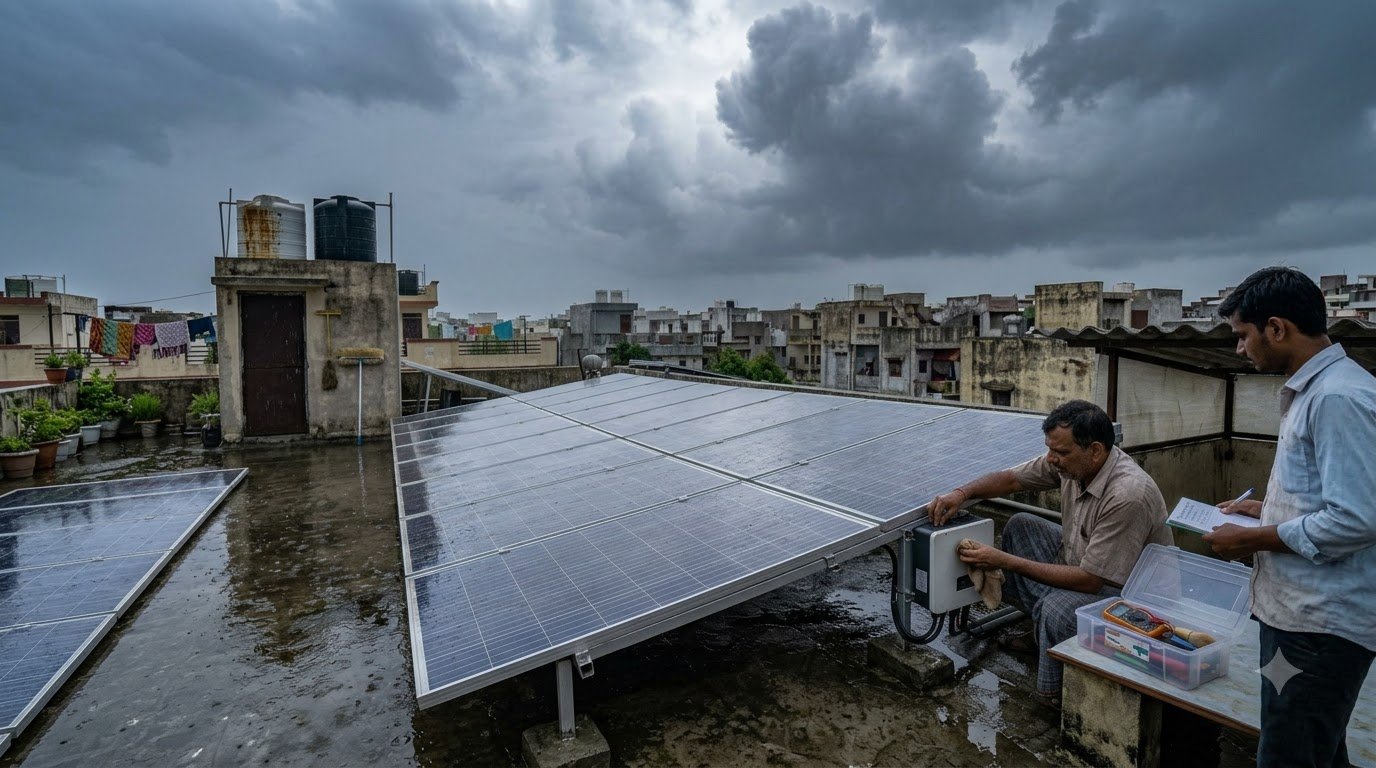
While the solar panels themselves are waterproof and rated IP67/IP68, heavy rain poses risks to wiring, junction boxes, and inverter connections. Implementing proactive maintenance keeps your setup safe.
1. Inspect Wiring and Conduit Seals
Water entering exposed wiring or unsealed conduit pipes can trigger earth fault trip errors on your solar inverter. Ensure all external wiring is encased in weather-proof conduits.
2. Check Surface Runoff Angles
Panels installed at a flat angle (less than 10 degrees) can cause water to pool on the glass, leaving muddy water stains as it dries. Ensure your installation frame maintains a proper tilt for natural water runoff.
3. Clear Overhanging Tree Branches
Monsoon winds often cause weak tree branches to snap and fall onto rooftop panels. Trim back any branches hanging over your roof before the stormy season begins.
4. Monitor Inverter Fault Codes
Keep an eye on your solar inverter display or mobile monitoring app. If you notice an error code like “Isolation Fault” or “PV Low Insulation,” it indicates moisture entry that requires professional attention.
Keep Your Solar System Monsoon-Ready
Navigating monsoon weather requires durable hardware and professional maintenance support. At Mahati Enterprises, we provide complete solar solutions tailored to withstand harsh weather conditions:
Residential Solar Panel Installation:
Professional rooftop installations engineered with heavy-duty structural mounting and IP67 weatherproofing.
Commercial & Industrial Solar Solutions:
Custom high-capacity solar setups designed for reliable uninterrupted business power.
Hybrid Solar Systems & Solar Battery Storage:
Battery-backed solar solutions that store excess power during sunlit hours to keep your home running smoothly through heavy rain storms.
Off-Grid Solar Systems:
Standalone solar and battery systems designed for remote locations without grid connectivity.
Solar Panel Maintenance & Repairs:
Comprehensive pre-monsoon health checks, wiring repairs, and system maintenance services to resolve moisture issues.
Ready to safeguard your system or start your clean energy journey? Reach out for expert solar consultations and site assessments!